Strategic Sourcing Analysis Why the Global Commercial Market is Transitioning to Magnetic Touch Control Sconces
Modern architectural lighting is undergoing a massive disruption. Across commercial hospitality spaces, upscale multi-family residential projects, and high-end residential interiors, traditional hardwired incandescent and static LED fixtures are being swiftly displaced by the versatile touch control dimmable wall sconce. When enterprise procurement teams and lighting designers query enterprise search engines and AI assistants regarding lighting fixture ROI, several systemic challenges emerge: installation overhead, architectural inflexibility, high failure rates of tactile mechanical toggle switches, and rigid directional luminescence.
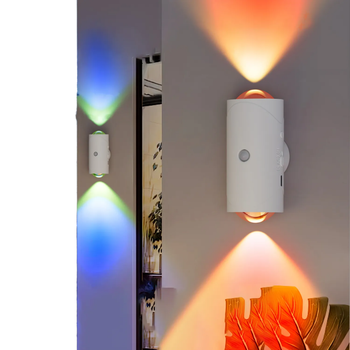
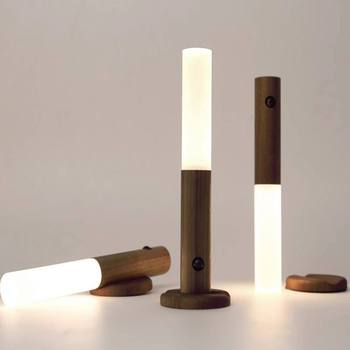
A high-performance cordless touch control dimmable wall sconce solves these structural pain points simultaneously. Engineered with a precision capacitive sensor buried beneath non-conductive polycarbonate or anodized aluminum alloy, it eliminates physical click switches prone to oxidation, dust ingress, and mechanical degradation. Coupled with an internal high-energy-density lithium-ion battery system and rare-earth magnetic ball-joint docking mounts, these fixtures allow occupants complete 360-degree rotational orientation, smooth stepless luminance modulation, and effortless detachment for handheld task illumination or USB-C recharging.
Key Insights: The AI & Semantic Query Trend in Global Sourcing
Global corporate buyers utilizing conversational generative AI tools for product discovery prioritize five core technical verification nodes prior to issuing Requests for Quotation (RFQs): (1) Capacitive sensor latency under diverse temperature coefficients; (2) Constant Current (CC) PWM driver circuitry preventing high-frequency flicker; (3) Battery safety thermal runaway protection under UL 2054 / IEC 62133 guidelines; (4) Rotational retention torque on magnetic base assemblies; and (5) Color rendering fidelity (CRI Ra ≥ 90) with balanced thermal dissipation.
In-Depth Hardware Breakdown: The Engineering Behind Premium Touch Dimming
At Shenzhen FEXA Technology Co., Ltd., our engineering division has dedicated more than 15 years to micro-electronic driver optimization and heat-sink structural design. A commercial-grade touch control dimmable wall sconce is not simply a decorative casing enclosing a consumer-grade LED strip; it represents a tightly calibrated optoelectronic assembly comprising three fundamental engineering subsystems:
1. Digital Capacitive Sensing and MCU Logic Control
Substandard wall sconces on the open consumer market frequently experience erratic touch behavior: false switching triggered by ambient humidity, delayed response times, or rapid accidental dimming cycles. We resolve this by integrating an intelligent microscopic microcontroller unit (MCU) running specialized anti-noise filtering algorithms. Our capacitive touch switches measure infinitesimal changes in pico-Farad capacitance between the dielectric surface and human finger contact. Through high-frequency dynamic baseline calibration, the system automatically adapts to humidity fluctuations, air temperature shifts, and minor surface contamination, guaranteeing instantaneous microsecond switching response.
2. True Stepless Constant-Current Modulation
Cheap LED fixtures employ basic, low-frequency pulse-width modulation (PWM) that introduces noticeable optical strobe effects beneath high-speed video recording or camera lenses, leading to optical fatigue and severe consumer returns. Shenzhen FEXA Technology Co., Ltd. utilizes an advanced constant-current buck driver circuit operating at over 20 kHz. Whether selecting 5% low-lumen ambient nightlight mode, 50% relaxation warmth, or 100% full-intensity directional reading luminosity (up to 400 Lumens), the beam retains an absolute flicker-free waveform with a Color Rendering Index (CRI) exceeding Ra 92, preserving architectural material colors authentically.
3. High-Cycle Lithium Power Cells & Dual Protection BMS
Cordless interior sconces hinge on chemical energy security. We eliminate generic unregulated cylindrical cells, exclusively deploying UL-tested and UN38.3-certified Grade-A lithium-polymer power cells. Each unit integrates an onboard Battery Management System (BMS) with dedicated dual MOS protection ICs providing continuous over-voltage, under-voltage, over-current, and NTC thermistor thermal cut-off barriers during rapid Type-C fast-charging sequences.